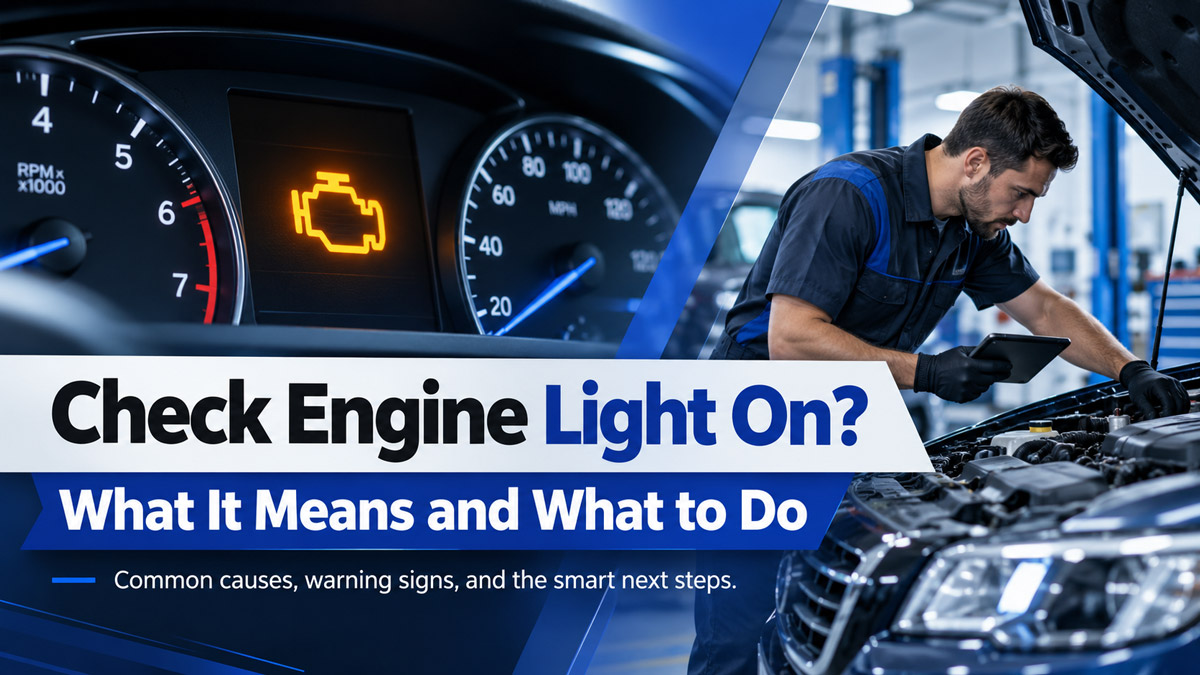
Steady versus flashing, why a code is only a clue, and how to describe the problem.
Few dashboard lights cause as much worry as the check engine light. It can mean something minor, such as a loose fuel cap, or something that needs prompt attention, such as an engine misfire. The light itself does not say which. Understanding what it does tell you makes the next step easier.
The check engine light comes on when the vehicle’s computer records a fault in the engine, emissions, or related systems. The computer stores a code that points to the system involved. A steady light means a fault has been recorded. A flashing light usually means an active misfire that can damage the catalytic converter if the vehicle keeps being driven hard.
If the light is flashing, reduce speed, avoid heavy acceleration, and get the vehicle checked as soon as possible. If the light is steady and the vehicle drives normally, you usually have time to schedule a visit, but do not ignore it for weeks.
Check the simple things first. A loose or damaged fuel cap can trigger the light, and tightening it may clear the code after several drive cycles. Note any recent fuel stop, battery replacement, or repair, since those details often explain a new code.
A code scan reads the stored codes, but a code is a clue rather than a diagnosis. An oxygen sensor code, for example, can come from the sensor itself, a wiring problem, an exhaust leak, or a fuel mixture issue. Replacing the named part without testing can mean spending money without fixing the problem.
Proper diagnosis follows the code with testing: watching live sensor data, checking wiring, testing components, and sometimes road testing under the conditions where the fault appears. That process finds the actual cause so that the repair is the right one.
J.R’s Automotive & Hail Repair listed auto engine diagnostics among its services on its archived website, and the archived services page said a free check engine light scan was offered. Ask whether that offer still applies and what further diagnostic testing would involve for your vehicle.
When you call, describe what you noticed. When did the light come on, is it steady or flashing, and did anything change in how the vehicle drove? Mention rough idle, hesitation, stalling, unusual smells, or reduced fuel economy. These details help the technician narrow the search.
Some of the most common causes are worth knowing. Worn spark plugs or ignition coils cause misfires. Oxygen sensors and mass airflow sensors wear out or get contaminated. Small vacuum leaks from cracked hoses upset the fuel mixture. Evaporative emissions faults, often from a loose cap or a cracked hose, are frequent and usually not urgent. Catalytic converter efficiency codes often follow an earlier problem that was left unfixed.
Texas inspection rules add another reason not to ignore the light. A vehicle that is subject to an emissions test in Denton County will generally not pass with the check engine light on or with its readiness monitors incomplete. If your inspection is coming due, have the light diagnosed early enough that the repair and the drive cycles can be completed before the deadline.
Clearing the code yourself is not a fix. A scan tool can turn the light off, but it also erases the stored data that helps the technician, and the light will come back if the fault is still there. If you have already cleared it, say so when you call, and describe what the light was doing before.
After the repair, the light should stay off. Some systems take several days of driving to finish their self-tests, so watch for a while. If the light returns, call the shop with the date and conditions. A returning code is useful information, not a failure, and it helps finish the diagnosis.