Batteries, cooling systems, A/C, tires, and paint: what heat does to a vehicle and how to stay ahead of it.
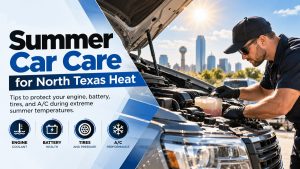
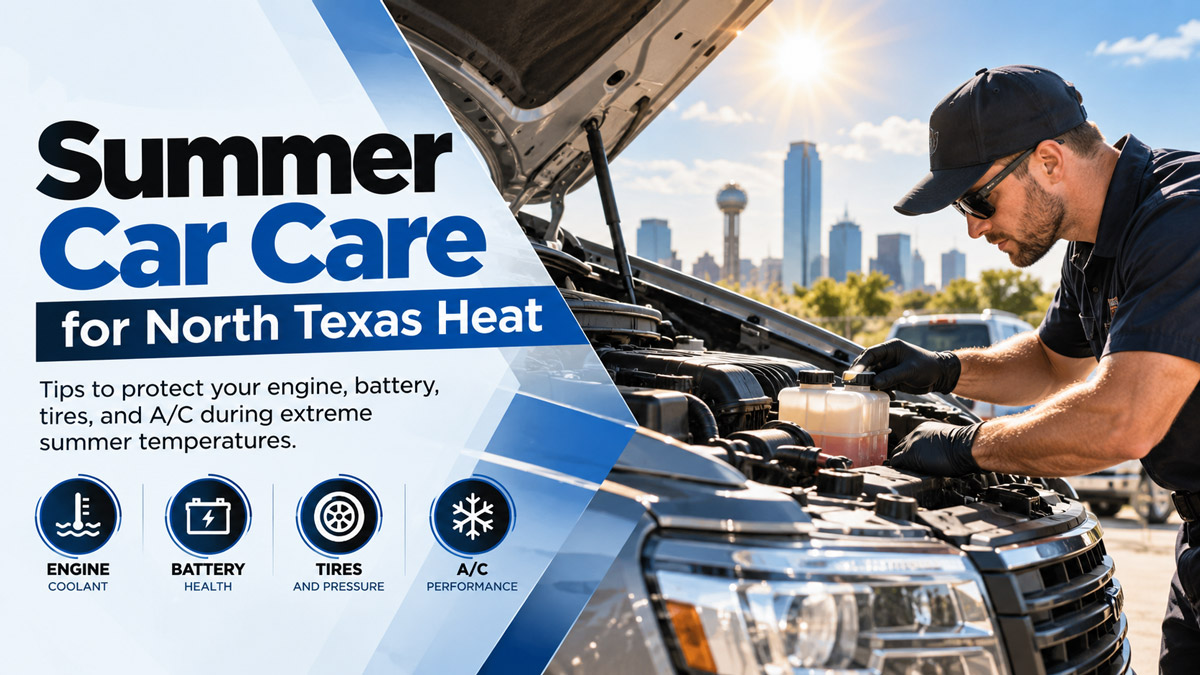
North Texas summers are hard on vehicles. Long stretches of high temperatures, intense sun, and hot pavement put extra stress on batteries, cooling systems, tires, air conditioning, and paint. A little preparation in late spring can prevent a breakdown on a hot afternoon on I-35.
Batteries are the first casualty of heat. High temperatures speed up the chemical wear inside a battery, and a battery weakened over the summer often fails on the first cold morning of fall. Have the battery and charging system tested before summer, especially if the battery is more than three years old.
The cooling system works hardest in summer. Check that the coolant level is correct and the coolant is in good condition. Look for leaks, cracked hoses, and a radiator clogged with debris or bugs. A temperature gauge that climbs in traffic is a warning to have the system checked before it overheats.
Air conditioning is a comfort issue that can quickly become a safety issue in Texas heat. If the A/C is cooling less than it used to, have it checked before the hottest weeks arrive. Low refrigerant usually means a leak, and finding the leak is part of a lasting fix.
Tires lose and gain pressure with temperature, and hot pavement adds to the heat inside them. Check tire pressure monthly when the tires are cold, and inspect the tread and sidewalls for cracks, bulges, or uneven wear. Underinflated tires run hotter and wear faster.
Oil does its job under heat, but old oil breaks down faster. Staying on your manufacturer’s oil change schedule matters more in summer. The archived J.R’s Automotive & Hail Repair services list included oil changes, filter replacement, battery service, air conditioning, and maintenance packages that follow manufacturer schedules.
Paint and interiors suffer from sun exposure. Park in shade when possible, use a sunshade on the windshield, and wash and wax the vehicle regularly to protect the clear coat. Spring and summer storms also bring hail, so covered parking during storm warnings can save a lot of trouble.
Keep an emergency kit in the vehicle: water, a phone charger, a basic first aid kit, and jumper cables or a portable jump starter. If the vehicle overheats, pull over safely, turn off the engine, and wait before opening the hood. Never open a hot radiator cap.
Belts and hoses age faster in heat. Rubber hardens and cracks over time, and a hose that looks fine from the outside can be soft or swollen near its clamps. A failed serpentine belt can stop the alternator, water pump, and A/C compressor all at once. Ask for belts and hoses to be checked whenever the vehicle is in for service during the warm months.
Wiper blades and washer fluid are easy to forget in a dry summer, then suddenly matter when a thunderstorm rolls in. Sun bakes the rubber on wiper blades so that they streak or chatter. Replace them when they stop clearing the glass cleanly, and keep the washer reservoir full of fluid rather than plain water so bugs and road film come off the windshield.
Watch the dashboard more closely on hot days. A temperature gauge that rises above its normal position, a battery light, or an A/C that suddenly blows warm are early warnings. Pulling over and calling for help when a gauge first moves is far cheaper than driving on until the engine overheats. The archived J.R’s services list included towing, which is worth knowing if the vehicle cannot be driven safely.
A pre-summer inspection is a simple way to cover all of this in one visit. Ask your shop to check the battery, cooling system, A/C, tires, belts, and fluids. Catching a weak part in May is far easier than dealing with it on the shoulder in August.