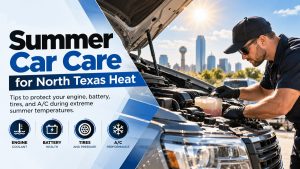
To check coolant level in a car, park on level ground, switch off the engine, let the vehicle become completely cold, and inspect the translucent expansion reservoir without opening its cap. The coolant should sit between the tank’s COLD MIN and COLD MAX marks. If it is below MIN, add the vehicle manufacturer’s specified premixed coolant until it reaches the cold maximum line.
Key Facts at a Glance
Check engine coolant only when the engine and cooling system are cold.
A cold coolant reservoir should read between COLD MIN and COLD MAX.
Coolant color does not reliably identify chemical type or vehicle compatibility.
Use the specification listed in the owner’s manual or printed on the reservoir cap.
Never open a pressurized radiator or expansion-tank cap when hot.
Repeated coolant loss indicates a leak or an internal engine problem, not normal consumption.
Before You Start
A normal coolant-level inspection takes about 5 minutes and requires no tools. Topping off generally takes another 5-10 minutes, costs approximately $10-$35 for a suitable premixed container, and has low difficulty when the reservoir is accessible and the engine is cold.
| Requirement | Typical value | Why it matters |
|---|---|---|
| Inspection time | 5 minutes | Allows visual level and condition check |
| Top-off time | 5-10 minutes | Includes cap removal and cleanup |
| Premixed coolant quantity | 1 quart to 1 gallon | A small top-off may need only 250-500 mL |
| Typical DIY cost | $10-$35 | Varies by brand and vehicle specification |
| Protective equipment | Gloves and eye protection | Reduces skin and eye exposure |
| Required condition | Cold, level vehicle | Prevents burns and inaccurate readings |
Do not begin if the temperature gauge is high, steam is escaping, coolant is spraying, or the engine has recently overheated. A cooling system can remain pressurized for hours after shutdown, and a loosened cap can release scalding coolant.
Why Must the Engine Be Cold?
The engine must be cold because hot coolant expands and pressurizes the cooling system. Opening a radiator cap or pressurized expansion-tank cap while hot can release liquid and vapor at temperatures well above normal skin tolerance, causing severe burns.
Wait until the engine has cooled fully, preferably several hours after driving. An overnight check is the safest option. Do not rely only on the dashboard temperature gauge, because the gauge may read normal while localized coolant remains hot around the cylinder head or turbocharger.
The cold reading also provides the correct reference point. Reservoir markings such as COLD MIN, COLD MAX, MIN, and MAX are calibrated for particular temperature conditions. A warm engine may show a higher level because coolant has expanded, so adding fluid to a warm MAX line can result in overfilling after the engine cools.
Step 1: Park on Level Ground and Switch Off the Engine
Park the car on a flat surface, select Park or first gear, apply the parking brake, and switch off the ignition. Let the engine cool completely before touching the reservoir cap.
A sloping driveway can make the fluid appear higher or lower than it really is, especially in a narrow expansion tank. Open the hood only after the engine has stopped and the electric cooling fan has had time to shut down. Some fans can start automatically even when the engine is off.
You will know the setup is correct when: the car is stable, the engine is cold to the touch near the top of the engine bay, and no fan or steam is present.
Common mistake: checking immediately after a short drive because the trip seemed too brief to heat the engine. Even a five-minute journey can raise coolant pressure.
Step 2: Locate the Coolant Reservoir
Find the translucent plastic tank connected to the cooling system by a hose. It is often near the radiator, one side of the engine bay, or the firewall, and its cap may show a thermometer, warning symbol, or wording such as Engine Coolant.
The tank normally has a visible fluid line and molded level marks. Some vehicles use a black or opaque reservoir, making the level difficult to see. Use the owner’s manual rather than guessing from nearby washer-fluid or brake-fluid containers.
| Reservoir or system design | How to identify it | Safe checking method |
|---|---|---|
| Translucent expansion tank | Plastic tank with MIN/MAX marks | Read fluid through the wall |
| Pressurized expansion tank | Warning cap connected directly to system | Read cold marks, open only when cold |
| Radiator with overflow bottle | Metal radiator cap plus small recovery bottle | Check the bottle and radiator only when cold |
| Opaque reservoir | Level is hidden by dark plastic | Use dipstick or manual procedure |
| Hybrid dual-loop system | Separate engine and inverter reservoirs | Identify the correct loop before filling |
Some hybrids use separate coolant loops for the gasoline engine, inverter, battery, or power electronics. Do not assume every reservoir contains the same fluid or can be filled with the same product.
Step 3: Read the Cold Level Marks
With the cap still closed, inspect the coolant level against the COLD MIN and COLD MAX marks. A properly cold system usually reads between the two lines, while a level below MIN requires investigation and possibly a top-off.
The fluid does not need to touch MAX. A reading halfway between MIN and MAX is normally adequate, because the reservoir must retain room for thermal expansion. If the tank is completely empty, do not simply fill it and assume the system is fixed. An empty reservoir can indicate a significant leak, air entry, or a recent overheating event.
You will know the level is acceptable when: the cold fluid line is visible between the specified marks and no wet residue surrounds the tank, hose connections, or cap.
Common mistake: judging the level from coolant stains rather than liquid. Dried coolant can leave a colored or white crust above the actual fluid line.
Step 4: Inspect Coolant Condition and Nearby Components
Inspect the coolant through the reservoir before opening anything. Healthy coolant may be green, blue, orange, pink, yellow, or another color depending on the vehicle specification, but it should not contain oil-like swirls, thick sediment, floating rubber, or heavy rust-colored sludge.
Look around hose joints, the water pump area, radiator seams, thermostat housing, and reservoir for wetness or crystalline residue. A sweet smell after driving can indicate a coolant leak, although coolant odor alone cannot identify the source.
A small amount of staining does not prove an active leak. Fresh wetness, a falling reservoir level, or a spray pattern does. Check the ground after parking, but remember that underbody shields can route coolant away from the original leak location.
Step 5: Add the Correct Coolant if the Level Is Low
Use a premixed coolant that matches the vehicle manufacturer’s specification. If the bottle says concentrate, mix it with distilled or deionized water at the ratio specified by the manufacturer, commonly 50:50. Pour slowly into the reservoir until the cold level reaches MAX or the vehicle’s specified fill mark.
Never choose coolant only by color. The same color can represent different additive technologies, and some manufacturers use multiple colors across model years. Product labels should list vehicle approvals, such as a manufacturer specification or standard, rather than relying only on broad terms like universal.
| Coolant category | Common examples | Typical service interval | Important limitation |
|---|---|---|---|
| IAT | Traditional green formulas | About 2 years or 30,000 miles | Often intended for older systems |
| OAT | Orange, red, pink formulas | About 5 years or 100,000-150,000 miles | Must match the required specification |
| HOAT | Yellow, turquoise, purple formulas | About 5 years or 100,000 miles | Chemistry varies by manufacturer |
| Si-OAT or P-OAT | European and Asian applications | Often 3-5 years | Color and chemistry are not interchangeable |
| Heavy-duty ELC | Fleet and diesel applications | Often 3-6 years | May require SCA or coolant analysis |
Service intervals vary by formulation, vehicle, and maintenance schedule. The owner’s manual and coolant manufacturer’s approval list take precedence over generic interval estimates.
You will know the top-off worked when: the cold level reaches the correct mark, the cap is fully secured, and no coolant remains on belts, wiring, paint, or hot engine components.
Common mistake: filling to the top of the tank. Overfilling removes expansion space and can force coolant out of the pressure-relief system after the engine warms.
Can You Use Water Instead of Coolant?
Distilled water is suitable for diluting concentrated coolant, but plain water is not a proper long-term replacement for the specified antifreeze mixture. Coolant provides freeze protection, raises boiling resistance, and supplies corrosion inhibitors for aluminum, steel, seals, and water-pump components.
In an emergency, clean water can be used temporarily to prevent immediate overheating when no coolant is available. Drive only far enough to reach a safe repair location, monitor the temperature gauge continuously, and have the system drained and refilled with the correct mixture as soon as possible.
| Situation | Temporary action | Required follow-up |
|---|---|---|
| Slightly low, correct coolant available | Add matching premix | Recheck cold level next day |
| Low on a remote road | Add clean water if necessary | Restore correct concentration promptly |
| Freezing weather | Do not rely on water | Use correct antifreeze mixture immediately |
| Empty reservoir | Do not continue driving | Inspect for leak and pressure-test system |
| Overheating or steam | Stop and switch off engine | Tow vehicle after cooling |
Tap water is a poor routine choice because dissolved minerals can form deposits and accelerate corrosion. Distilled water is preferable when mixing concentrate.
Which Coolant Should You Choose?
The best coolant is the product that meets the exact vehicle specification, not the product with the most familiar color or the longest advertised life. A dealership part number, owner’s manual specification, or reputable aftermarket approval is more reliable than a universal-color label.
Do not mix unknown coolant types merely because both bottles say antifreeze. Some modern products are designed to be compatible, but compatibility claims must come from the manufacturer. If the existing coolant is unidentified, contaminated, or badly discolored, a proper drain and flush is safer than repeated mixing.
A coolant flush is especially appropriate after using the wrong fluid, finding sludge, replacing a failed head gasket, or discovering severe rust. A professional shop may use a vacuum fill tool to remove trapped air, which matters on engines with high-mounted heater cores or complex cooling passages.
What If the Coolant Level Keeps Dropping?
A coolant level that repeatedly falls below MIN indicates a leak, trapped air, evaporation from a faulty cap, or an internal engine problem. Normal coolant systems are closed enough that frequent additions are not expected.
Start with a cold-level log. Mark the reservoir level with a removable pen, record the date and mileage, and recheck after several drives. Inspect for wet hose ends, radiator stains, a leaking water pump, heater-core odor, or coolant inside the passenger compartment.
A pressure test is often the fastest professional diagnostic. The shop pressurizes the cold system and checks whether pressure falls or coolant appears externally. If no external leak is found, technicians may test combustion gases in the coolant or inspect engine oil and exhaust behavior.
| Symptom | Likely area | Driving advice |
|---|---|---|
| Wet hose joint | Clamp, hose, or connector | Repair before normal driving |
| White crust near water pump | Pump seal or gasket | Arrange prompt repair |
| Sweet cabin odor, fogging windows | Heater core | Avoid delaying diagnosis |
| Thick white exhaust after warm-up | Internal coolant entry | Stop driving and tow |
| Milky oil under cap or on dipstick | Coolant-oil contamination | Shut down engine |
| Temperature rises under load | Low coolant, thermostat, radiator, or fan | Stop if gauge continues upward |
A few drops after a repair can result from spilled fluid, but a measurable decline over days requires diagnosis.
Can You Drive With Low Coolant?
Do not continue normal driving with a low or empty coolant reservoir, especially if the temperature gauge rises, a warning light appears, or steam emerges. Low coolant can prevent proper circulation and create hot spots around the cylinder head, turbocharger, or exhaust valves.
If the level is slightly below MIN, the engine is cold, and there are no overheating symptoms, adding the correct coolant and arranging an inspection may be reasonable. If the reservoir is empty, the engine has overheated, or fluid is visibly leaking, shut down and arrange a tow.
Never remove the cap to “see whether coolant is boiling” while hot. Let the vehicle cool completely first. A normal-looking reservoir does not eliminate all risk, because air pockets and blocked passages can leave parts of the engine undercooled.
What Do Brown Coolant, Oil, or White Smoke Mean?
Brown or oily coolant can indicate corrosion, incompatible coolant, transmission-fluid contamination in some radiator designs, or engine-oil contamination. Thick white exhaust that continues after the engine warms can indicate coolant entering the combustion chamber, although brief white vapor in cold weather may be normal condensation.
Milky beige oil on the dipstick or under the oil-filler cap is a serious warning when combined with coolant loss. Short trips can create light condensation under the oil cap, so the finding must be interpreted with oil level, coolant level, exhaust behavior, and engine temperature.
Floating flakes may come from degraded hoses, sealant, corrosion, or an incompatible coolant reaction. Do not remove debris with a household filter and continue driving. The system needs inspection and potentially a complete flush with component replacement.
How Often Should You Check Coolant?
Check coolant about once a month, before long trips, and whenever the temperature gauge behaves differently. A cold-level inspection is also sensible after cooling-system repairs, coolant replacement, or a warning light.
| Use pattern | Suggested check | Additional action |
|---|---|---|
| Normal commuting | Monthly | Inspect before seasonal trips |
| Long-distance travel | Before every major trip | Check hoses and reservoir cap |
| Towing or heavy loads | Every 2-4 weeks | Monitor temperature under load |
| Recent cooling repair | Daily for several days | Look for trapped air or leaks |
| Older vehicle with known loss | At each fuel stop | Schedule pressure testing |
Coolant replacement intervals depend on the fluid and vehicle. Use the maintenance schedule rather than a universal mileage rule. Testing freeze protection with a refractometer can reveal concentration, but it cannot confirm corrosion-inhibitor condition or coolant compatibility.
How Much Does Coolant Service Cost?
A simple DIY top-off commonly costs $10-$35 and takes less than 15 minutes. Professional diagnosis, flushing, or component repair costs more because labor, coolant capacity, air bleeding, and access vary considerably.
| Service | Typical cost range | Typical time | What it includes |
|---|---|---|---|
| Visual level inspection | $0-$30 | 5-15 minutes | Level and visible leak check |
| DIY top-off | $10-$35 | 10-15 minutes | Premixed coolant and cleanup |
| Pressure test | $50-$120 | 30-60 minutes | Leak detection under pressure |
| Coolant drain and refill | $90-$200 | 1-2 hours | Old-fluid removal and refill |
| Flush with diagnosis | $150-$350 | 2-4 hours | Cleaning, refill, and air bleeding |
| Water-pump or hose repair | $150-$1,200+ | 1-8 hours | Parts and labor vary by vehicle |
These are typical consumer ranges, not fixed prices. Turbocharged engines, hybrids, luxury vehicles, and vehicles with difficult access can require additional labor.
Vehicle-Specific and Special Cases
Hybrid vehicles may contain separate cooling circuits for the gasoline engine and high-voltage inverter or battery system. The correct reservoir, fluid specification, and air-bleeding procedure differ by model, so follow the service manual and avoid opening a high-voltage system.
Electric vehicles still use coolant in many battery, inverter, motor, and charger circuits, although they do not use an engine cooling loop. A low EV coolant level can affect high-voltage components and should be handled according to the manufacturer’s procedure.
Diesel trucks and heavy-duty engines can require extended-life coolant, supplemental coolant additives, or test strips to control cylinder-liner cavitation. Passenger-car coolant advice does not automatically apply to wet-sleeve diesel engines.
Common Mistakes and How to Fix Them
- Opening a hot cap: Stop, reinstall the cap if safe, move away from steam, and wait until completely cold.
- Using color as a specification: Check the manual and bottle approval; flush unknown mixtures if necessary.
- Filling above MAX: Remove excess only when cold and dispose of coolant properly.
- Ignoring a falling level: Record the level and arrange a pressure test rather than repeatedly topping off.
- Using tap water permanently: Replace the mixture with the correct coolant and distilled-water ratio.
- Driving after overheating: Allowing the gauge to return to normal does not prove the engine escaped damage; inspect the cause before resuming travel.
Coolant is toxic to people and animals and has a sweet taste. Keep containers closed, clean spills immediately, and take used coolant to a recycling or hazardous-waste facility.
Frequently Asked Questions
Can I check coolant while the engine is warm?
You can visually observe the reservoir, but the accurate level reading comes from a cold system. Do not remove the cap while warm because pressure can release scalding coolant. Wait several hours after driving, then compare the fluid with the reservoir’s cold markings.
Should coolant be at MIN or MAX when cold?
A cold reservoir should sit between MIN and MAX. Filling to the cold MAX line is acceptable when the level is low, but the tank needs space for expansion. A level halfway between the marks is usually sufficient if it remains stable.
Why is my coolant reservoir full but the radiator low?
A full reservoir with a low radiator can indicate a blocked recovery hose, faulty radiator cap, trapped air, or an internal leak. Only inspect the radiator when the engine is fully cold. If the mismatch persists, have the cooling system pressure-tested.
Can I mix two brands of the same coolant?
Two brands may be mixable if both explicitly meet the same vehicle specification and chemistry requirements. Brand similarity alone is insufficient. When the existing product is unknown or visibly contaminated, a drain and refill avoids compatibility uncertainty.
How long does coolant last in a car?
Many modern long-life coolants last about 5 years or 100,000-150,000 miles, while traditional IAT coolant may require replacement around 2 years or 30,000 miles. The vehicle maintenance schedule and coolant approval determine the correct interval.
What should I do if coolant is leaking while driving?
Stop safely if the temperature rises, a warning appears, steam develops, or the leak is substantial. Switch off the engine, wait until it is cold, and arrange recovery. A small temporary water addition may protect the engine only long enough to reach a repair location.
The Bottom Line
Checking coolant level in a car is a five-minute cold-engine inspection: park level, locate the correct reservoir, read the cold MIN/MAX marks, inspect for leaks or contamination, and add only the manufacturer-specified premixed coolant. A stable level between the marks is normal. Repeated loss, overheating, steam, white exhaust, milky oil, or an empty reservoir requires diagnosis before continued driving.